3D Rendered Airport Set Includes Airplane
For designers, developers, and creators looking to elevate their visual projects, a 3D rendered airport set that includes an airplane is a powerful asset. This detailed digital environment captures the essence of modern travel with precision and realism. From boarding gates to baggage carousels, these sets are ideal for a wide range of applications.
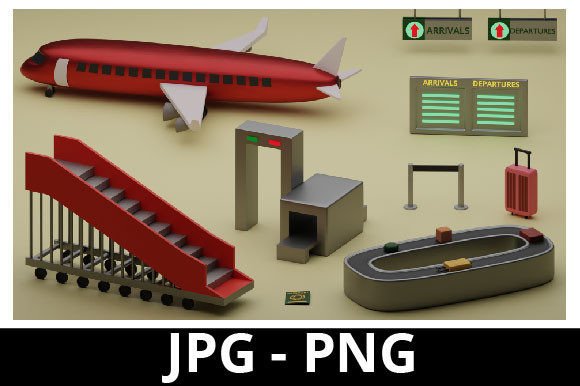
Whether you're working on a graphic design project, a marketing campaign, or a virtual simulation, a 3D airport set offers a level of detail that can bring your ideas to life. These sets often include elements like airplanes, stairs, baggage, arrivals and departures signs, and more, making them versatile for different creative needs.
Key Features of a 3D Rendered Airport Set
A high-quality 3D rendered airport set typically includes a variety of components that mirror real-world airports. Here are some common features:
- Airplanes: Detailed 3D models of aircraft in various configurations.
- Stairs and Walkways: Realistic representations of airport pathways and access points.
- Baggage Handling Systems: Models of conveyor belts, luggage carts, and loading areas.
- Arrivals and Departures Signs: Digital displays showing flight information and schedules.
- Security Equipment: X-ray machines, metal detectors, and other airport security tools.
- Passenger Elements: Travelers, suitcases, and other human-centric objects.
These elements are often created with attention to lighting, textures, and perspective, ensuring that the final render looks authentic and immersive. The inclusion of multiple file formats—such as JPG and PNG—makes it easier to integrate these assets into different software and platforms.
Practical Applications for 3D Airport Sets
The versatility of a 3D rendered airport set makes it valuable across various industries. Here are some practical use cases:
- Graphic Design: Use the set to create promotional materials, social media content, or website banners that reflect the travel experience.
- Marketing Campaigns: Airlines, travel agencies, and tourism boards can leverage these visuals to showcase destinations and services.
- Education and Training: Aviation schools and airport management programs can use the set to teach students about airport operations and passenger flow.
- Virtual Simulations: Game developers and VR creators can incorporate these sets into interactive experiences that simulate air travel.
- Product Development: Designers working on airport-related products, such as signage or wayfinding systems, can benefit from realistic 3D environments.
By using a 3D airport set, professionals can save time and resources while maintaining a high standard of quality. Instead of building everything from scratch, they can focus on refining details and enhancing user engagement.
Benefits of Using 3D Rendered Airport Sets
There are several advantages to incorporating a 3D rendered airport set into your workflow:
- Enhanced Visual Appeal: The realistic textures and lighting make the final product more engaging and professional.
- Improved Communication: Visuals help convey complex ideas quickly and clearly, especially when presenting to clients or stakeholders.
- Increased Efficiency: Pre-built sets reduce the need for manual modeling, allowing designers to work faster and more effectively.
- Consistent Branding: A well-designed airport set can reinforce brand identity through color schemes, typography, and overall aesthetics.
- Better User Experience: Whether for a website, app, or presentation, high-quality visuals contribute to a more enjoyable and intuitive experience.
These benefits make 3D airport sets a valuable tool for anyone involved in design, marketing, or digital media. They not only enhance the look of a project but also improve its functionality and impact.
Choosing the Right 3D Airport Set
When selecting a 3D rendered airport set, consider the following factors:
- Quality and Detail: Look for sets that offer high-resolution textures and accurate modeling of airport elements.
- Compatibility: Ensure the files are compatible with your preferred software or platform.
- Customization Options: Some sets allow for modifications, which can be useful if you need to adapt the design to specific needs.
- File Formats: Check if the set includes multiple formats like JPG, PNG, or 3D model files (e.g., FBX, OBJ).
- License and Usage Rights: Understand the terms of use to avoid any legal issues when integrating the set into your work.
By carefully evaluating these aspects, you can find a 3D airport set that aligns with your goals and enhances your creative output.
Real-World Examples and Recommendations
Many professionals have successfully used 3D airport sets in their projects. For instance, a travel blogger might use the set to create a visually appealing post about a recent trip, while a designer could incorporate it into a brochure for an airline client.
Some popular scenarios include:
- Creating a holiday-themed advertisement that highlights the excitement of air travel.
- Designing a modern airport terminal layout for a new airport development.
- Developing a boarding pass template that matches the style of a 3D airport environment.
- Building a passenger journey visualization for a transportation company's annual report.
These examples demonstrate how a 3D airport set can be adapted to fit different contexts and audiences. By leveraging these resources, creators can produce compelling and professional results without the need for extensive custom modeling.